
In Dubai, "is my child ready for school?" is a harder question than back home. It's not only about reading and counting, but also about the language. Some families are preparing for a Russian first grade, others for Year 1 at a British school, and some want to keep both options open.
Here's which skills really matter by age 6, and how to build them without turning childhood into endless lessons.
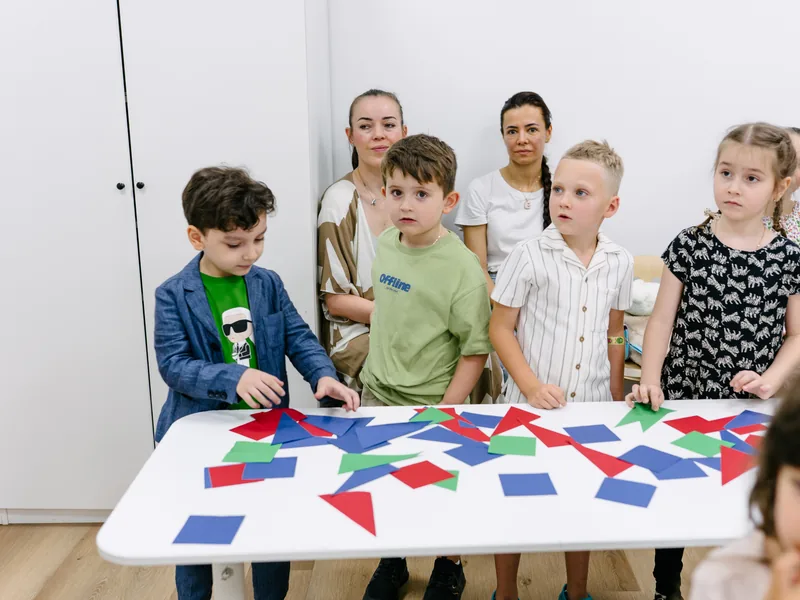
When to start preparing
Ideally a year before school, at 5 to 5.5. That's enough time to learn letters, reading and counting calmly, without rushing your child.
If your child goes to an English-speaking nursery, start with Russian even earlier. By age 5, many children in Dubai play and talk mostly in English, and Russian becomes the "home" language.
Checklist: what your child should be able to do
This is a guide, not an exam. If a skill isn't there yet, it's a reason to give it some attention, not a diagnosis.
- Retells a short story in their own words.
- Makes up a 4-5 sentence story from a picture.
- Pronounces the sounds of their first language correctly.
- Asks questions and explains what they want.
- Knows the letters and tells vowels from consonants.
- Reads simple words syllable by syllable.
- Writes their name in block letters.
- Counts to 20 and back, knows number bonds to 10.
- Solves simple "more or less" and "add or take away" problems.
- Knows basic shapes and finds their way around a page: top right, under the line.
- Holds a pencil correctly.
- Traces outlines and colours inside the lines.
- Cuts with scissors, models with clay, builds small construction sets.
- Focuses on one task for 15-20 minutes.
- Follows 2-3 step instructions.
- Finishes what they start.
- Copes calmly with losing a game.
- Dresses on their own, manages fasteners and shoes.
- Packs their bag and keeps track of their things.
- Can ask an adult for help.
If your child is going to an international school
From the 2026-27 academic year, British schools in Dubai that start in September place new pupils by their age on 31 December: FS1 from age 3, FS2 from 4, Year 1 from 5.
The entrance assessment usually looks at whether your child:
- understands spoken English and simple instructions;
- knows English letters and sounds, usually taught through phonics;
- can count and understands basic maths concepts;
- can communicate and work in a group.
The most common difficulty for Russian-speaking children is the language, not the knowledge: a child can solve the problem but doesn't understand what's being asked. So preparing for an international school is mostly about English in real classroom situations: listening to the teacher, answering questions, working through tasks.
For more on choosing a school and admissions, read How to Choose a School in Dubai.
If your child is following the Russian curriculum
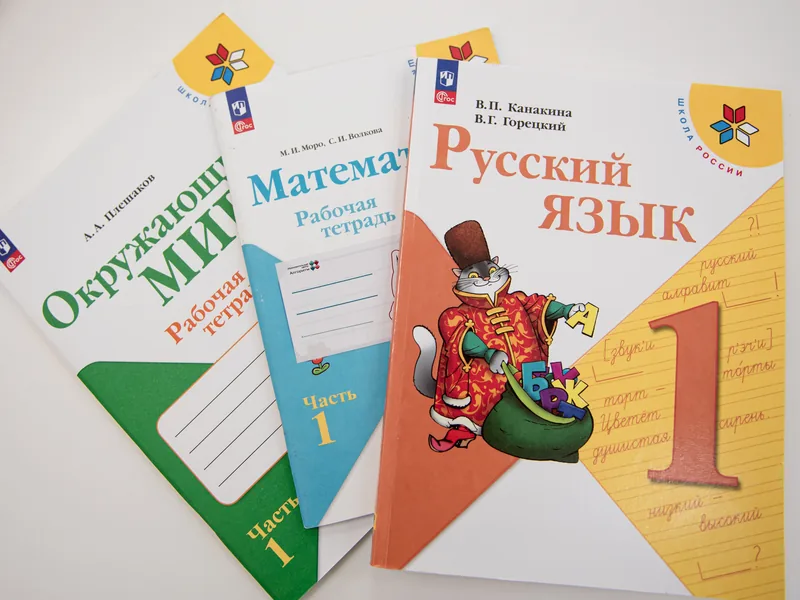
A Russian first grade expects children to read and write in Russian, and for a child growing up in an English-speaking environment that's a separate task. Children who speak Russian fluently at home often surprise their parents at assessment: their speaking is good, but sound analysis, reading and writing lag behind children of the same age in Russia.
Regularity matters here. Two or three sessions a week with a teacher do more than an intensive month just before school.
7 simple habits to build at home
- Read aloud every day in the language that's harder to keep up. Talk about the story: "Why did the character do that?"
- Play word games: "name a word that starts with M", "what's the last sound in cat".
- Count in everyday life: plates on the table, steps, coins, cars in the car park.
- Give multi-step tasks: "take the book, put it on the table and call Dad".
- Draw, model and cut out. It's the best preparation for writing.
- Teach them to finish things: a completed puzzle, a finished drawing, toys put away.
- Don't compare your child with others. Bilingual children almost always have one language that develops faster, and that's normal.
When to see a specialist
It's worth having your child seen by a teacher or speech therapist if:
- pronunciation problems are still noticeable at 5;
- it's hard for them to focus even on something they enjoy;
- they avoid drawing and any pencil tasks;
- they mix languages so much that they're not understood in either.
Start with a free assessment at Algorithm: a teacher will check school readiness and your child's Russian and suggest the right preparation format.
Book a free assessmentSchool preparation at Algorithm
We run two school preparation formats for children from 5.5:
| Format | When | What's included |
|---|---|---|
| Saturdays | Saturday, 09:00-13:00 | Reading and writing in Russian, maths, the world around us, speech development. A good fit if your child goes to an English-speaking nursery and you want to keep Russian going without overloading the week. |
| Five days a week | Monday-Friday, 09:00-13:00 | All-round preparation, including for international school: Russian, maths, the world around us, speech and reading, plus extra English (Jolly Phonics, First Math, Storytelling). |
Both programmes follow the Russian federal education standard (FGOS). See all programmes.
FAQ
At what age should we start preparing for school?
Ideally a year before school, at 5 to 5.5. If your child goes to an English-speaking nursery, keep up Russian from an earlier age.
Should my child read before starting school?
For a Russian first grade, reading syllable by syllable is expected. In the British system children learn to read in FS2 and Year 1 through phonics, but knowing letters and sounds gives them a confident start.
How do I know if my child is ready for school?
Use the checklist: speech, letters, counting, fine motor skills, attention and independence. A teacher's assessment gives an objective picture.
Can we prepare for Russian and international school at the same time?
Yes, with the right balance: core subjects in Russian plus regular English practice. That's how the five-day preparation at Algorithm works.
What age do children start Year 1 in Dubai?
From the 2026-27 academic year, schools that start in September admit children to Year 1 if they turn 5 by 31 December.
Sources
- Khaleej Times: new admission age rules for Dubai schools from 2026-27.
Find out whether your child is ready for school with a free assessment at Algorithm Training Center.
Book a free assessment